
Before and just after surgery
Pain
Settle the knee down.
Swelling control, motion inside your surgeon’s limits, and getting the quad to switch back on before anything else.
What We Treat
Maybe the surgery date is on the calendar. Maybe it’s months behind you and the knee still isn’t yours. Either way the goal is the same: a knee you’ll land on, cut on and stop on without thinking about it.
Sound Familiar?
Any of these? Keep reading.
Why It Happens
A graft is strong the day it goes in and then spends months maturing. Meanwhile the leg does something predictable: the quad switches off, swelling parks itself in the joint, and full straightening gets harder to win the longer it’s missing. Add a hip and hamstring that lost strength while you were on crutches, plus a landing pattern that put the knee in trouble in the first place, and you have the real list of things rehab has to fix.
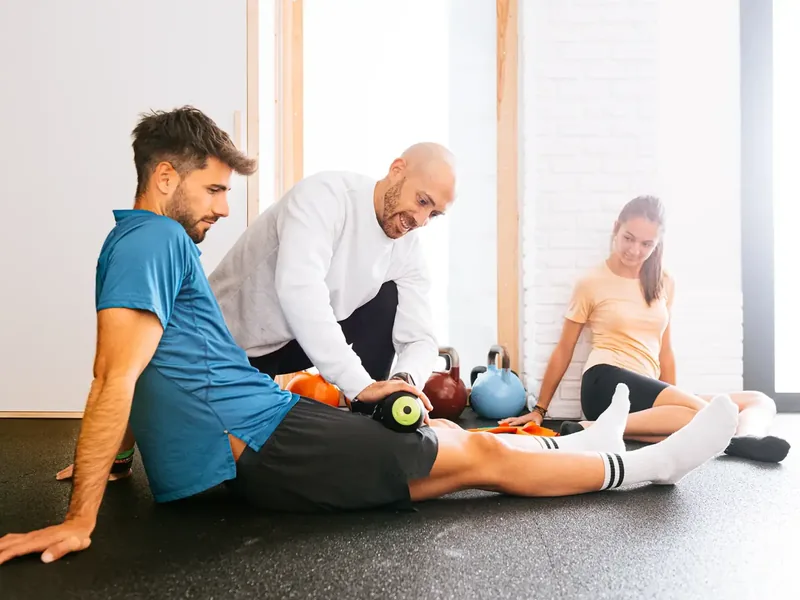
You’re used to doing the work. Nobody has to talk you into effort. What you need is someone who knows which effort counts right now and which effort sets you back, with a licensed physical therapist directing your care at every visit, working alongside your surgeon’s protocol instead of around it.
The Honest Truth
Nobody regrets starting too early. Plenty of people regret waiting.
How We Fix It
Every plan has an endpoint. Here’s what the four phases look like for an ACL.
Before and just after surgery
Pain
Swelling control, motion inside your surgeon’s limits, and getting the quad to switch back on before anything else.
As swelling drops
Prime
Full straightening first, then bend, then a walking pattern with no limp left in it, hands-on the whole way.
Strength, then speed
Perform
Progressive quad, hamstring and hip strength, then running, then jumping, landing and cutting in that order.
Return-to-sport testing
Prevent
We test both legs side by side for strength, hopping and landing control, and show you the numbers behind the answer.
He genuinely cares about his patients and was so helpful in getting me ready to return to sport. All the PTs are awesome as are the rest of the staff.
Shared by Elizabeth O. · Return to sport
Before: came in needing to get back to her sport
After: ready to return to sport
Questions, Answered
Both, if you have the time. Going into a reconstruction with the knee straight, the swelling down and the quad firing gives you more to work with on the other side. We do pre and post-surgical rehab, so the clinic that preps you is the clinic that rebuilds you. If your surgery is already done, we start from wherever you are, and we work from your surgeon’s protocol.
The plan is built to protect it, not to test it. Early work stays inside the limits your surgeon sets, and the loading that comes later is what makes the muscle around the knee strong enough to defend it. Aching after a session is normal. Sharp pain, new swelling and a knee that gives way are information, and your therapist changes the plan when they show up.
You get an estimated number of visits at your evaluation, and a reason for the number. Your plan runs through all four phases, Pain, Prime, Perform and Prevent, and you will always know which one you are in and what is left. Playing again is a clearance decision made with your surgeon, on how the knee tests against the other leg. Anyone who hands you a date instead of a test is guessing.
Still Deciding?
You don’t need to know which clinic or which service is right before you reach out. Start a request, or call the clinic closest to you, and we’ll help you sort out the rest.
5.0 · 866 Google reviews
Let’s start with your name.
Start your request on our secure patient portal. It’s the same place every appointment request on this site goes, so nothing gets lost along the way.
Start My Request (opens in new tab)Opens our patient portal at patients.moorephysicaltherapy.com.
Visit Us