
1
We find the exact knot.
For the knot that stretching, foam rolling and rest never reached. One thin needle, one specific muscle, and it’s always your call.
What It Is
You’re the kind of person who handles things yourself. You rolled it, stretched it, watched the videos, gave it time. Which is exactly why you’re here: you have already ruled out everything you could do alone.
A trigger point is a band of muscle fiber stuck in a low-grade contraction it can’t release on its own. Dry needling puts a thin, sterile needle straight into it. When the needle finds the spot, the muscle often fires one quick twitch and lets go. Then we load and retrain it in the same visit, while the range is there.
It is not acupuncture. Acupuncture works from meridians and the flow of Qi. Dry needling is anatomical: your therapist goes after one myofascial trigger point in one named muscle, picked out during your movement exam. Same needle, completely different reasoning.
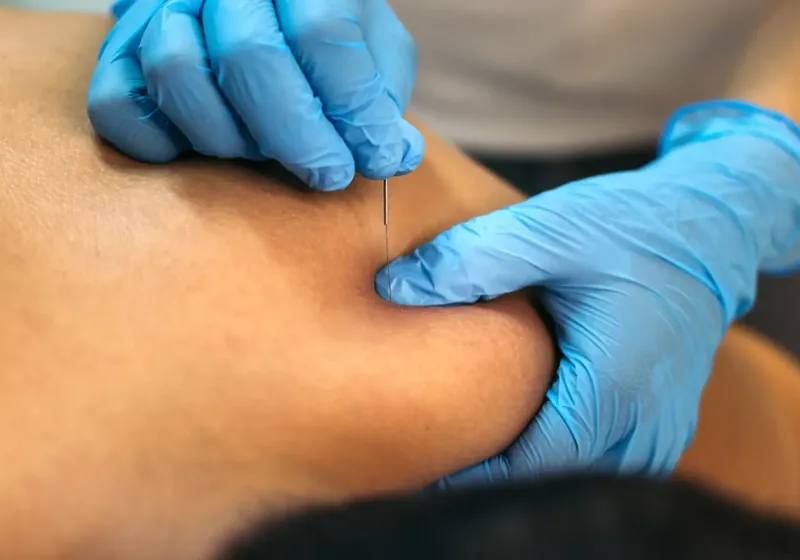 Always optional, never sprung on you
What It Helps
A knot doesn’t stay put. The muscles around it start covering for it, your movement quietly changes, and the pain eventually turns up somewhere it never started.
What A Session Looks Like
1
We find the exact knot.
2
One quick twitch, then release.
3
We retrain it, same visit.
Why It Works
Reaches depth hands can’t.
Works where stretching stalled.
Retraining starts the same visit.
Explained first, agreed to always.
Pairs Well With
Questions, Answered
Here is the honest version. The needle going in feels like a quick pinch. When it finds the trigger point, the muscle often twitches once, which is stranger than it is painful and over in a second. Mild soreness in that area for a day or two afterwards is normal. We explain every step before we pick up a needle, and it is always optional: say no and your plan carries on without it.
No. The needle looks similar; the reasoning behind it is not. Acupuncture comes from traditional Chinese medicine and works from meridians and the flow of Qi. Dry needling is anatomical: your therapist targets one myofascial trigger point in one named muscle, identified during your movement exam. Different framework, different target, different goal.
Yes, and we screen for it before we offer it. We generally leave it out if you have a bleeding disorder, if you take medication that affects clotting, or where a tender point sits close to important nerves or blood vessels. A real fear of needles is reason enough on its own. If you are pregnant, that is a conversation to have with your therapist and your physician first. Not sure where you land? Call your preferred clinic: Mesa (480) 218-1344, Gold Canyon (480) 982-7948 or Tempe (480) 833-7879.
Still Deciding?
You don’t need to know which clinic or which service is right before you reach out. Start a request, or call the clinic closest to you, and we’ll help you sort out the rest.
5.0 · 866 Google reviews
Let’s start with your name.
Start your request on our secure patient portal. It’s the same place every appointment request on this site goes, so nothing gets lost along the way.
Start My Request (opens in new tab)Opens our patient portal at patients.moorephysicaltherapy.com.
Visit Us